







Production of bio-packages

Environmental preservation is a topic that will always be relevant. And we, as manufacturers of polyethylene products, cannot stay aside.
The Istok team is committed to conscious consumption and caring for the environment, so today we are going to talk about bio-packages, their production and comparison with paper, polyethylene.
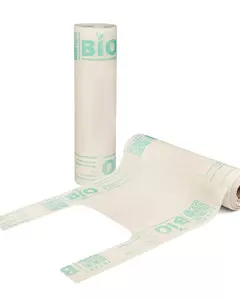
Starch granule bags: the advantages
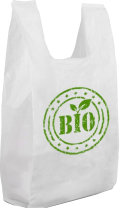
The main advantages of Istok biodegradable bags are:
- elasticity and softness;
- no harm to the environment by proper disposal;
- completely decompose in compost or soil within 30 - 60 days;
- do not accumulate static electricity.
Since starch bags are not recyclable, you need to clearly control their disposal. To start the decomposition process of such products, it is necessary to provide sufficient moisture, optimal temperature and access of microorganisms that trigger biodegradation process.
Please note: starch bags can’t be dumped in a landfill. They are compostable under domestic or industrial conditions.
What's the difference?
Home composting is the decomposition of the product in a closed, insulated container or compost pit. If you live in a flat, the best option would be to purchase a composting kit at home. If you have a house or a summer cottage with land - you can dig a compost hole.
Industrial composting is the same decomposition of products, but already within the enterprise, where specialized waste treatment equipment is installed.
Which is better: starch granule, paper or polyethylene?
For a while paper was known as the most environmentally friendly material as possible. It’s likely that this information is still "walking" on the Internet. First of all we want to say that this is a myth. "Why?" - you ask. Our answer is ready, read below.
Paper production is a multi-stage process that significantly pollutes wastewater and also requires huge amounts of wood and electricity. The significant disadvantages of paper products are:
- fragile bags, unsuitable for repeated use;
- rare processing;
- production releases harmful substances;
- overuse of resources: water, wood, electricity.
If we talk about plastic bags, the situation here is much better than paper. Plastic is recyclable and therefore can be used as a secondary raw material. This approach helps to activate conscious consumption and maintain the environment without overloading it with garbage.
Giving second breath to polyethylene is a great way to help our planet. And to make it even easier, we are ready to buy your recyclable material and convert it into granule, suitable for packaging.
By the way, scientists from the Danish Ministry of Environment and Food found out that paper bags harm the environment 40 times more than polyethylene (on condition of their processing).
To sum up, we can draw the following conclusions: it is recommended to manufacture and use packets from starch granules or polyethylene. Such products can be either recycled or completely decomposed - both options do not harm the environment and save your budget.
Similar news
